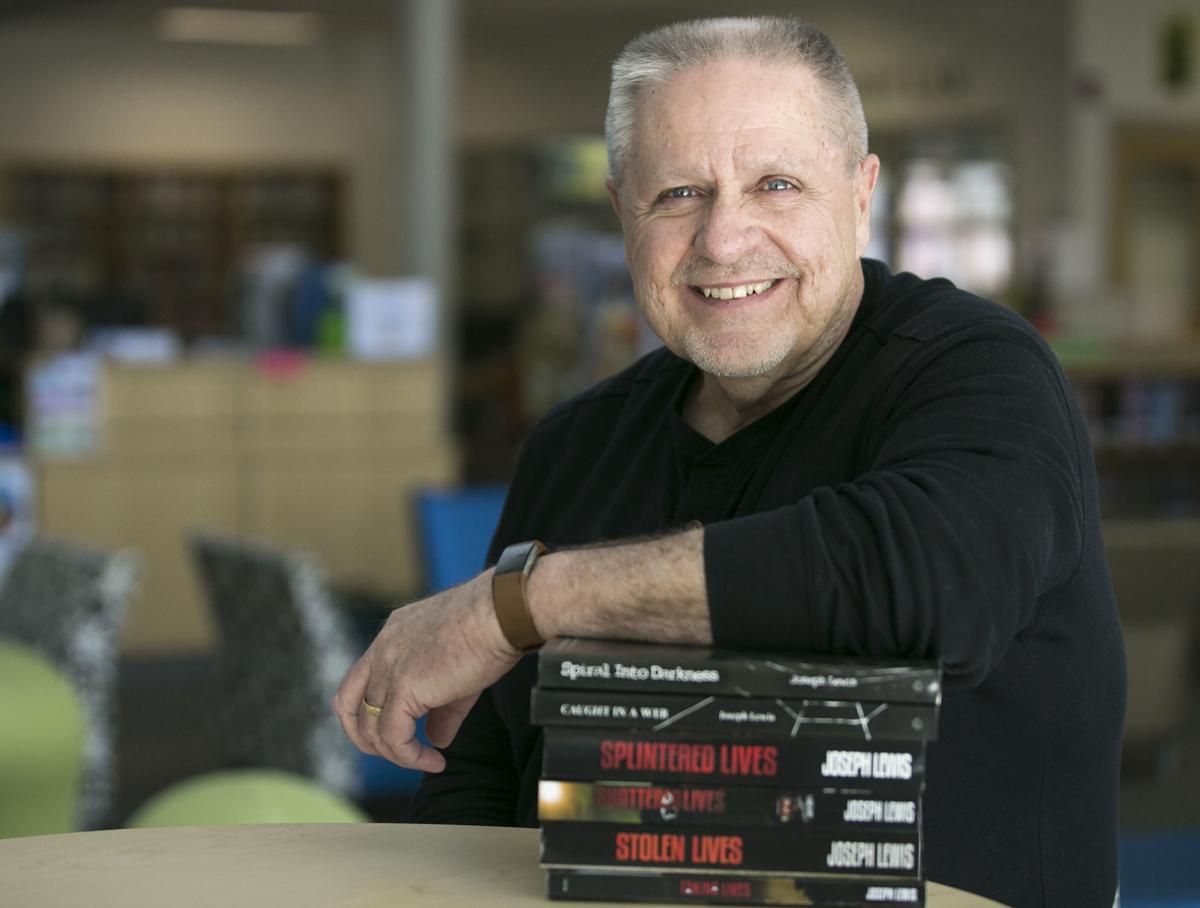
Earlier this month, I had the pleasure of speaking to a creative writing class at a local high school. This is one of my favorite activities, besides actually writing. It was a mixed-grade class made up of freshmen through seniors. I was invited by one of the most talented and gifted teachers I ever had the pleasure of working with- thank you, Theresa!
After I gave them my spiel, which included a PowerPoint and two short book trailers, I opened the floor to questions. Hands sprang up faster than the weeds in my garden! Most weren’t run-of-mill questions one might expect from high schoolers. Many were philosophical, indicating that I had hit a nerve. One young man had taken the time to research my website and had taken notes while I spoke- he deserves an A+. Wow!
Here are a few of the questions and my answers. They aren’t in any specific order. I begin with some of the most involved and thought-provoking questions and proceed from there. For brevity, I did not include all of them.
Did you always want to be an author?
No, when I was in high school, I had dreams of a singing career. I had been on stage since I was in the fourth grade, and was a member of the church choir, often performing solos. In middle school, I was in a cover band as a drummer, but because I did most of the lead vocals, I was moved out front and the band brought in another drummer. In high school, I was a soloist in the show choir. My senior year, the private school I attended asked me to do vocals for a series of radio and TV commercials. A buddy of mine, who played guitar, and I recorded several demo tapes and sent them off. One recording company based in Chicago asked for several more and then asked for photos. In the end, because I didn’t write my music, they said no thanks.
My first publication was a short story, Dusty and Me, that a magazine bought in 1987. But life took hold, and I immersed myself in raising a family and in teaching, coaching, and eventually administration. Therefore, my first book, Taking Lives, Prequel to the Lives Trilogy, was published in 2014.
Were you disappointed that you never made it in music?
Yes and no. Yes, because I had sung so much and still enjoy it. As a principal, instead of giving a “principal’s address” at commencement, I would pick a song that depicted the graduating class or a song that had special meaning to me, and sing it to the graduates. My reasoning is that often, a wordy speech is forgotten by the time someone sneezes, whereas the memory of a song can last a lifetime. Even today, having been retired from education since 2020, I have past graduates who spot me at the grocery store or at the gas station and tell me they still remember the song I sang to them. The same occurs with their parents.
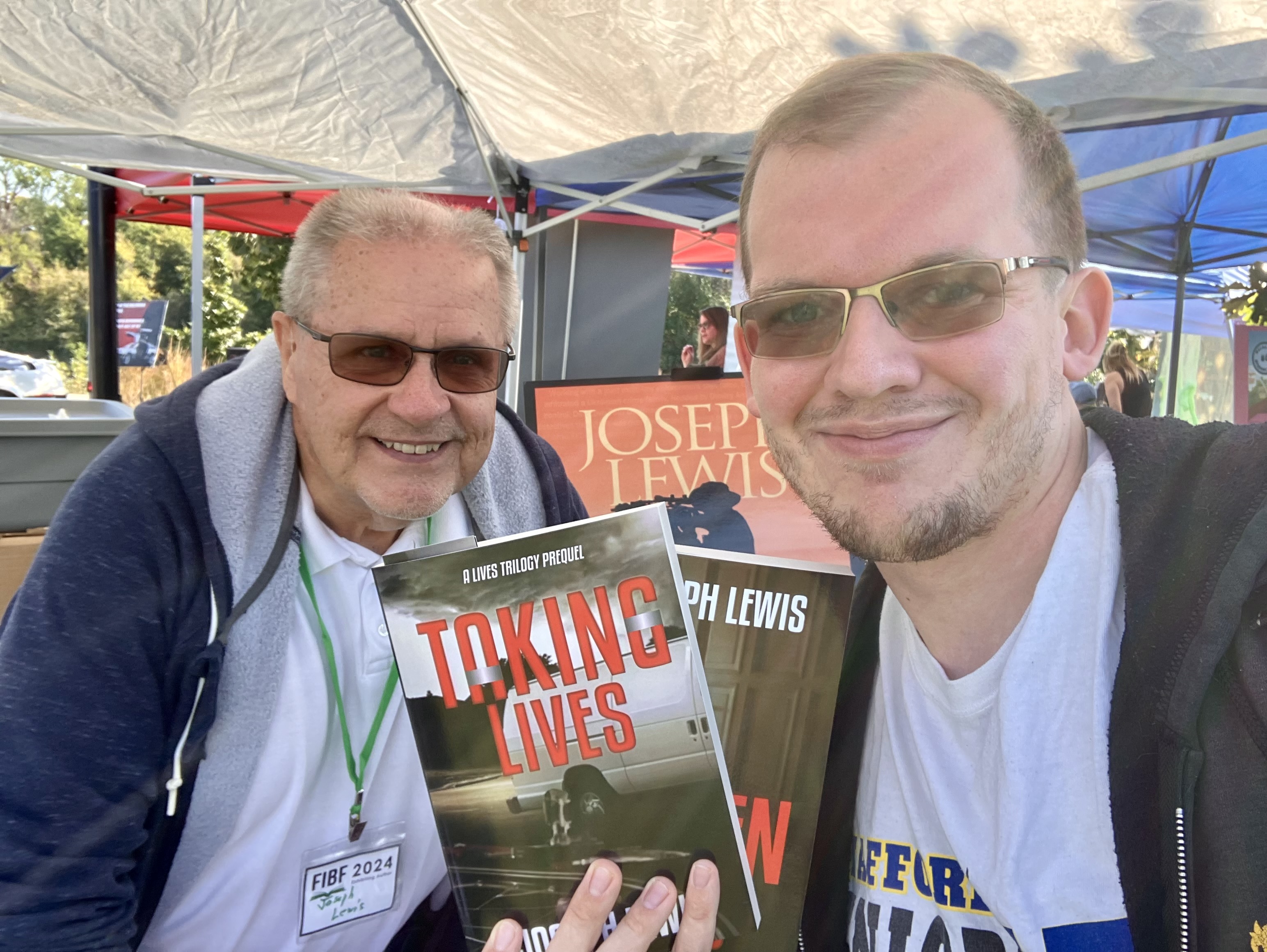
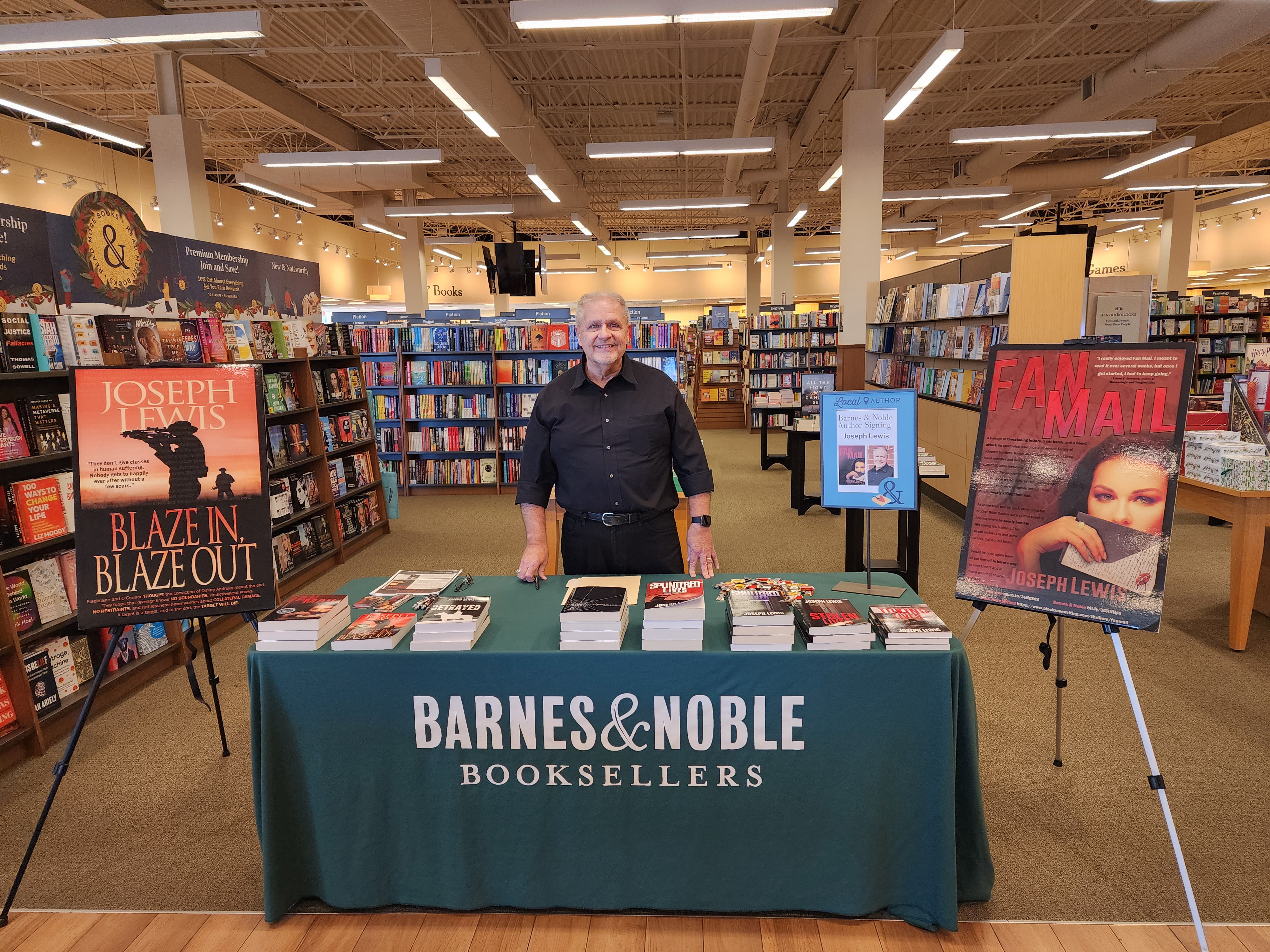
But as an author, it is special that a book can be read over and over, and each time it is read, the reader can find new meaning I put into the words. To see one or more of my books in the stacks at the library or at a bookstore is special. To have readers purchase one of my books and ask me to sign it, and to have a picture with them is pretty special, too.
Do you ever get writer’s block?
Honestly, no. I’ve never had that happen to me. I make it a habit to write each day, whether or not I feel like it. It’s all about discipline, really. Even though I’m retired (my wife isn’t) and have ‘chores’ to do around the house, I carve out time to write. Writing is now my ‘job’. But it is also my passion. It’s something I enjoy doing.
There are outstanding writing days, and there are days where it seems like a struggle. As John Denver once sang, “Some days are diamonds, and some days are stones.” You take the good with the bad. My writing routine helps me break through most every day. I begin by reading the previous day’s writing (usually a chapter or two). I might make small edits or rearrange sentences and paragraphs. This helps in the overall editing when the story is completed. But more importantly, by reading the previous day’s work, it puts me in the setting, in the character’s mind, and my writing just takes off. I also never end a chapter with a clean ending. I always leave something hanging. This helps in keeping the reader reading. It keeps the story moving.
How much exposition should I write? (This came from the young man who researched me and took notes).
Only what is absolutely needed. I try to give show background or brief exposition through my characters’ words or actions. My question to you is: would you rather read action, get immersed in the setting, or read about a character’s background and what he/she might wear, or is doing, reading, eating, etc? I find that when I read, I skip paragraphs of exposition because I’d rather discover it through the eyes and actions of the characters. I’m a thriller-crime-mystery writer, so please, please give me the bullet, the knife, the puzzle and dilemma. That is where the story is, not in what a character eats, wears, or how tall/short he/she is.
Do you ever run out of ideas?
For me, the answer is no. As I write, the ideas keep coming like rabbits breeding. The trick is to control them. Take a few notes in a notebook for a future story or two. If the ideas are related to what I’m writing, I add them to a quote/comment page and keep the page in a file on my desktop. That way, it’s handy as I write. But I don’t have a problem with ideas or keeping my stories fresh.
Do you get upset when a reader interprets your book differently than what you intended?
My belief is that when one of my books has been completed, edited, and then published, the book is no longer mine. The book belongs to the reader. The meaning of the story is interpreted differently from person to person, based on their experiences, age, and circumstances. I have no control over that. My responsibility is to write a good story. How the story is interpreted is entirely up to the reader. That’s why reviews vary from 1 star (very poor, unliked) to 5 stars (outstanding book, loved).
How important are themes when you write?
I don’t write with a theme in mind. I concentrate on my characters and what I put them through, how they make decisions, and how they might react to the circumstances I place them in. Themes come after the book is written, and only in the reader’s eyes. All readers have “life” happen to them, and it’s these experiences that they bring into any book. As I write, I can influence a theme, but I think if I concentrate on writing to a theme, unless it’s an essay, the writing will be pretty boring- not only for the reader, but for the guy who wrote it, me.
—
There were other questions the kids asked, but these were the biggies. I appreciated the opportunity to speak to them. Theresa’s intention is to have me speak at each high school in the district because she liked the way I connected with the kids. I explained that connecting with the kids has always been important to me, and why I got along so well with my students. For a teacher (or a used-to-be teacher who is now an author), connecting is so important.
Speaking of connecting, I will be a participant in the 4th of July Fredericksburg Craft Fair in Fredericksburg, Virginia on July 4th, from 10:00 am until 4:00 pm. I will find out the location of my booth in the next day or two, so I’ll keep you posted. From my understanding, there will be almost 300 venders, so there should be something for everyone. If you are in the area, I hope you stop by, purchase one of my books, and have your picture taken with me.
I’d love to hear your thoughts, so please use the comment section below. As always, thank you for following along on my writing journey. Until next time …


