Brian Kaufman is another Black Rose Writing author and his posts on Facebook about his books and his comments on posts by others intrigued me enough to reach out and ask if I could interview him. He writes in multiple genres, something not many authors do. I, myself, would never consider it just because I think my ability, and perhaps my interest, wouldn’t allow me to do that successfully.
He and I have quite a bit in common. He thought of being a baseball player, while I wanted to be a football player. Both of us cook and like it (me, perhaps a bit too much which is indicative of my profile), and both of us like music, though he tends to blues, while I tend to 60s rock and roll, as well as modern country.
The other thing that struck me is that our writing style is similar. Both of us “think” of the story for a while before sitting down in front of a keyboard. I call it “prewriting in my head” which, when looked at by an outsider, looks like I’m doing nothing. My daughter, Emily, asked me one time when we sat down to eat lunch, “What are you thinking? You look far away.” And I was. I was thinking of a passage of dialogue between two characters.
Here is my interview with Brian, and I hope you enjoy it as much as I did with his answers to my questions.
What was it that made you decide you had a story to tell and to become an author? I started young. My parents told me I used to make up comic books for the neighborhood kids when I was five. I couldn’t read yet, so I narrated. (Lots of telling; not a lot of showing, ha.) By the time I was 12, I’d decided to either play centerfield for the Yankees, or write. I ran a fourteen-second hundred-yard dash and couldn’t turn on a fastball, so the author won out.
As an author or writer, what sets you apart from others?
My process is probably different. I research genre tropes, themes, and philosophical underpinning—anything that might inform the story’s subtext. Then I write, trying very hard to sound exactly like myself.
How do ideas for your stories present themselves? How do you know what story lines to follow and which to ignore?
I live in the mountains and walk for an hour or two a day for exercise, imagining stories and scenes. After a while, I have the story in mind. This process can take a long time. I battled my Civil War novel, Dread Tribunal of Last Resort, for twenty years before putting chapters to the page. As for knowing which story lines to follow and which to avoid, I don’t do that very well. I’ve had five or six novels that I’ve abandoned at or near the ends. One of them, I completed twice and threw both versions away. (It was crap.)
What genre do you write, and why?
I’ve written historical fiction, literary fiction, horror, a baseball novel, steampunk, and upmarket fiction. My current WIP (work in progress) is noir. This is probably unhelpful career-wise, but it’s great for staying fresh. There are some connections between genres, of course, so I’m not starting completely over each time. For example, the philosophical subtext of noir is very similar to that of horror (somewhere in the nexus between existentialism and nihilism). Philip Marlowe would make a good horror protagonist.
Besides writing and telling a good story, do you have any other talents?
I am a very good cook (I cooked professionally for many decades) and an extraordinarily weak blues guitarist (all love and no skill).
If you were to name one or two books that you deem unforgettable and that had a major impact on you, what would they be, and why?
Bradbury’s Something Wicked This Way Comesand Lovecraft’s At the Mountains of Madness jump to mind. I read both when I was in Junior High, and both books grabbed me by the throat. They were pure magic of the couldn’t-put-them-down, stayed-up-all-night-to-read variety. The atmosphere in Bradbury and the fascinating premise of Lovecraft hit me square in the imagination.
What authors do you read regularly? Why?
Too many authors to name. My habit of reading 100 books a year began with Monday night trips to the library with my father. For an author, there are benefits to reading multiple genres and learning new tricks of the trade. I have favorite authors, of course (Robert Crais, Dennis Lehane, Larry McMurtry, Michael McDowell, Greg Gifune, Jane Austen, and Mary Shelley, etc.) Problem is, I could list two dozen more. I cherish them all.
If you were to have dinner with 5 individuals living or dead, who would they be and why?
I’d start with my folks, who passed away in recent years. On different nights, I’d select Mary Shelley and Edgar Poe (just to listen to them talk about writing and the genres they invented) and Jack Ruby (mystery solved!) Such a fun question. Ask me tomorrow, and I’ll have different names for you.
What is your writing routine? When you write, do you plan or outline ahead or are you a “pantser”?
I operate in the middle. As I mentioned, I write in my head as I walk in the mountains. By the time I put my fingers on the keyboard, I’ve wrestled the story into a basic three or four act structure. I don’t have a written outline, but I know where the story’s going. This leaves room for surprises, which seem to write themselves, and helps with pacing, since I’m following a mental roadmap of sorts.
When writing, how much do you read? Do you read in or out of your genre?
I used to worry about voice osmosis, but not enough to stop reading. I’m locked into my own voice these days, so that worry went away. If I’m switching to a new genre, I read a ton of the fiction in that genre, partly because I want a certain tone, and partly so I can remind myself that I didn’t invent genre tropes—if I’m original, it’s because I sound like me, not because of some “twist” I think I discovered.
Is there something you set out to do, but somehow, it didn’t work out for you? (In writing, or something else you felt was important to you at the time?).
I really admire painting, and I took some classes to explore that medium. I completed one canvas that was emblematic of my absolute lack of talent and parked it away in the back of my van. Driving the kids to school, I heard my eight-year-old daughter ask her brother, “Who painted this? Hahahahahahaha!” In heaven, Claude Monet and Bob Ross exchanged knowing glances.
What tips would you give to new or even experienced writers?
Early on, I submitted a short story that got an editor response. He told me that the story was good, but that I was unknown. Recognizable names on the cover sell copies, so if I wanted to get a foot in the door, I’d need to be better than the name authors. Simply put, you must keep improving. Forever.
How did you “teach” yourself to write or did it just come naturally? What lessons would you pass on to others?
I take classes. I read every book on writing I could get my hands on, and I talk to other writers. I join critique groups, and I attend conferences. The thing is, writing is such a solitary endeavor that you forget that improvement comes from interaction. You can’t improve your writing in a vacuum.
How do you handle a negative critique?
In a critique group, I handle it by shutting my mouth and listening. I tend to ignore bad critical reviews (and don’t attach too much importance to good ones either). As for customer reviews, I’ve occasionally responded by offering a refund to one-star reviewers. (One of my novels is self-published, so it seemed like the right thing to do.) No one’s ever taken me up on the offer, though.
Is there a type of writing/genre that you find difficult to write? Why?
I avoid, for the most part, sex scenes. They almost always strike me as gratuitous, given the themes I write about.
How important are the elements of character, setting, and atmosphere to a story, and why?
The elements of the story are all important, but I must admit a special preference for character. We are humans, and we are most interested in stories about humans.
Do you see yourself in any of the characters you create? How/Why?
One piece of early advice I listened to was to avoid using yourself as a character. Too easy to let aspects of that character go unexamined. Easy to be too harsh or too forgiving. But unconsciously putting yourself into a character is probably unavoidable. There’s bound to be some bleed. For example, the protagonist of my noir novel is a sarcastic bastard who sounds surprisingly like myself, ha.
Is there an unforgettable or memorable character that will not leave your head, either of your own creation or from a book you’ve read?
The child’s vision of Atticus Finch in To Kill a Mockingbirdsticks with me. In the movie, the selection of Gregory Peck to play Atticus may be the most spot-on casting in Hollywood history.
Tell us about your most recent book. How did you come up with the concept?
I planned a historical adventure series that would begin with a search for Noah’s Ark in 1841. The books would also trace a marriage between my protagonist and his wife. The final book in the series would take place after his wife’s death and center on a historical UFO mystery in Texas. I wrote a few chapters of the first book, but they didn’t move well. By contrast, I wrote a chapter or two of the last book (in a series not yet written), and the damned thing practically wrote itself. Luckily, the book works as a stand-alone.
How did you come up with the title?
The title comes from a quote from my protagonist, talking about how history repeats itself. “If not a strict repetition, then certainly a persistent echo.” The novel examines why that is, and what it means for us today—a theme that helps make a novel set in 1897 relevant to today’s world.
From your book, who is your favorite character? Who is your least favorite character? Why?
I have only favorites. August Simms, my protagonist, is wise (his wisdom being hard-earned). He’s clever, a little manipulative, but above all else, kind. His much younger friend, Bill Ackerman, is an unusual character who avoids work like the plague, preferring instead to ride around in his wagon, observing human folly. His wit is a constant joy. Nadine Martin, a single mother running a boarding house, is courageous for reasons I can’t mention. And then, there’s Bullet the horse…
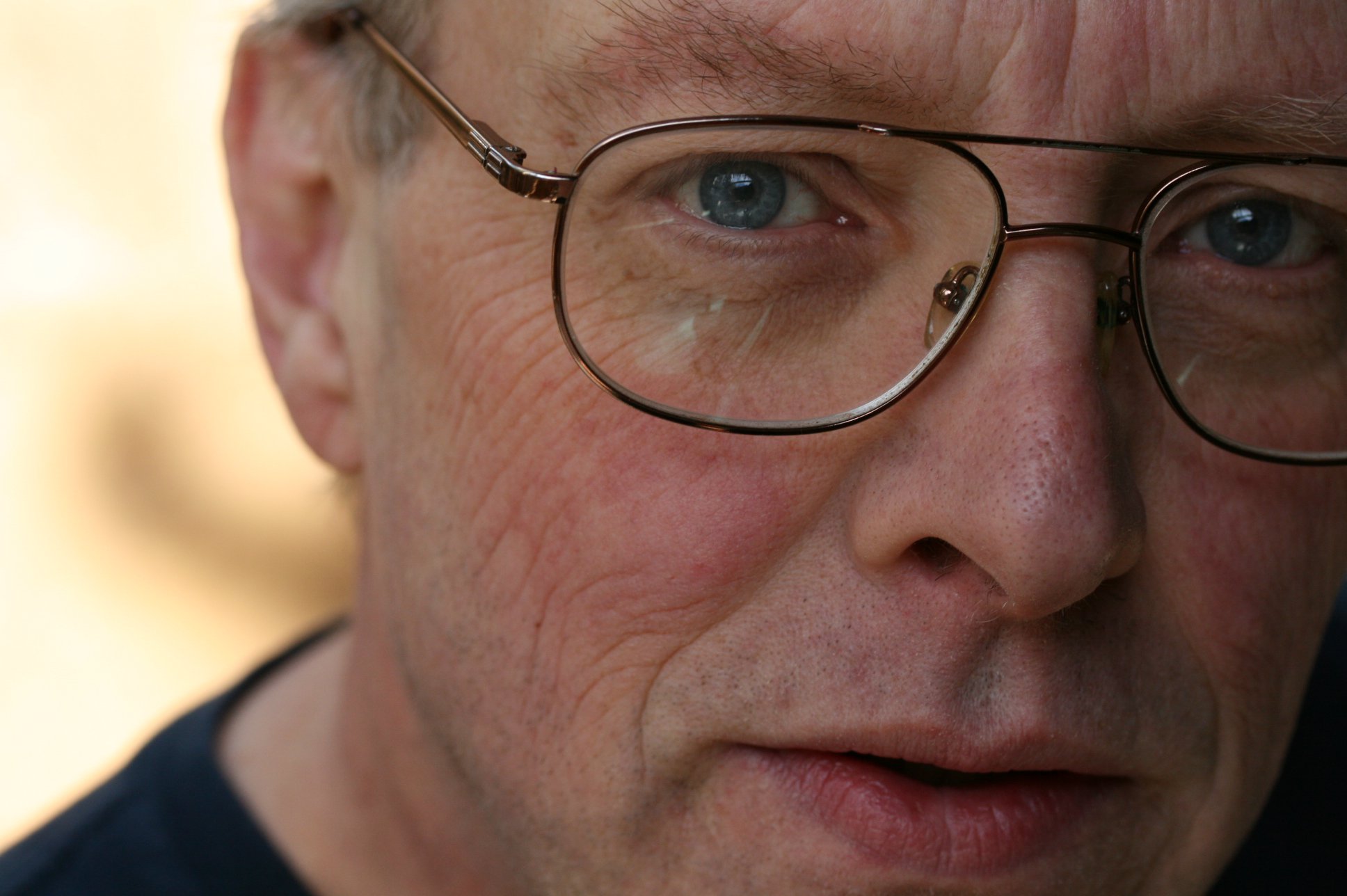
Author/media contact information
Website: authorbriankaufman.com
Facebook: https://www.facebook.com/bkaufman1852
Instagram: https://www.instagram.com/kaufman8201/?hl=en
Links to Brian’s book on Amazon and B & N
Amazon:
B&N
https://www.barnesandnoble.com/w/a-persistent-echo-brian-kaufman/1143179556

 jrlewis85's Blog
Great interview! Congrats to Brian for the Hawthorne shortlist! This book is on my “must-read” list.
LikeLiked by 1 person
Thanks for stopping by, Cam! I do enjoy these interviews!
LikeLike