After rereading my interview with Travis Tougaw, I was struck by how many similarities there are between us. Both of us are authors with Black Rose Writing, and we write in the same genre, thriller-suspense, though I am more thriller-crime-mystery with a strong coming-of-age thread running throughout. But both of us have a passion for teaching- Travis with English, and me with psychology, and both of us have a passion for music, though Travis is much more accomplished than I am or was. Travis is a multiple instrument musician, while I was a drummer and a singer.
I think that’s why I enjoy interviewing other authors. I never know what I might encounter, and I have to admit that with each interview I do, I learn something- not only about the individual I’m interviewing, but I learn something about myself.
I think you’ll enjoy my interview with Travis Tougaw!
What was it that made you decide you had a story to tell and to become an author?
I’ve always wanted to be a writer from the time I was in elementary school. I’m drawn to the power of stories to connect people. Over the years, I’ve dabbled in short story and essay writing, and I even wrote the text for a picture book that never materialized (but I had an incredible title for it). I’ve found that writing novels and telling stories in a longer form is most appealing to me, as it gives me the most room to watch characters grow and explore more complex plots.
As an author or writer, what sets you apart from others?
There are a lot of writers who tell amazing stories about characters with an unusual talent or ability or some other exceptional quality that sets them apart. I try to focus on everyday people- people you might bump into at the grocery store, who find themselves in an unusual situation. In my novel Foxholes, I draw heavily from my military experience, but the main character isn’t a super soldier or war hero; he’s a regular guy who had a desk job that happened to be in a combat zone.
How do ideas for your stories present themselves? How do you know what story lines to follow and which to ignore?
Many times, I’ll have a climatic moment in mind, so I ask myself how to get there. That usually leads to developing characters and finding a plausible storyline. Then, I’ll back up to the beginning and start telling myself the story, often when I’m out walking the dog. Those walks are some of the best “writing” sessions because they help me see where potential wrong turns are. By the time I get around to sitting at the keyboard, I can work on putting my ideas into words and refining the plot lines I’ve already thought through.
What genre do you write, and why?
I write mystery/thrillers because that’s what I enjoy reading. I love a tense story that keeps you glued to the page, desperate to find out what happens next, and I hope my readers experience that in my writing.
Besides writing and telling a good story, do you have any other talents?
I started playing music when I was sixteen. I began with acoustic guitar and gradually added other instruments. I now play guitar, bass, mandolin, lap dulcimer, and hammered dulcimer, and I toy around with some percussion instruments. Also, I’m not sure if I’d call this a talent, but I love trivia. I compete in an online trivia league, and I’m waiting to get my chance on Jeopardy.
If you were to name one or two books that you deem unforgettable and that had a major impact on you, what would they be, and why?
When I was in middle school, I read Son of Interflux by Gordon Korman a half dozen times. It’s not a classic, and definitely not something you can impress people at parties with by telling them you read it. But I love the way he crafts memorable characters and puts them in tricky situations, and the reader gets to see them grow and change. That’s probably the book that made me think about writing as a viable occupation. For something a bit more academic, I love Flannery O’Connor’s Wise Blood. Grace and redemption are recurring themes in my work, and I admire how O’Connor can pull on those threads in surprising ways.
What authors do you read regularly? Why?
I read every new book Harlan Coben, Ruth Ware, and Lee Child publish. They write mystery/thrillers, but they each have their own spin on the genre. Coben always comes up with a plot twist that, even though I know a plot twist is coming, leaves me thinking, “How did he do that?” Ware creates great characters and puts us in their heads, so we can feel the tension they’re experiencing. Child has built such a strong brand with Jack Reacher that he can really go over the top with characters and plot elements. Some of the things he does would feel like parody coming from another writer, but with him, you can’t help but enjoy the ride. So much to admire about what all three of them can do.
If you were to have dinner with 5 individuals living or dead, who would they be and why?
Rich Mullins (who was a singer/songwriter who died in 1997), Flannery O’Connor, Ernest Hemingway, Jonathan Swift, and J. Edgar Hoover. Rich, Flannery, and Ernest because they’ve all had a lot of influence on my writing, and I think it would be fun to talk to them about creativity and art. Jonathan Swift, because one of my English professors at Angelo State and I had a long-running argument about some of the meaning and themes in Gulliver’s Travels, and I’d like to definitively settle that. And Hoover, because…well, I have some questions about a particular era of American history.
What is your writing routine? When you write, do you plan or outline ahead or are you a “pantser”?
I used to outline extensively. If I didn’t have it in my plan, it didn’t happen in my story. Now, I have a general idea of what’s going to happen. The narrative arc is laid out in my mind, but I don’t know exactly how I’m going to get there. One of my happiest moments while writing Foxholes was when a character who I thought was a mere plot device to move the action forward ended up being a central figure in the plot. I would not have planned it out that way before I started writing, but I was glad I allowed myself the freedom to discover that this character was much more important than I initially gave him credit for.
When writing, how much do you read? Do you read in or out of your genre?
I read every day. I’m a slow reader, but I’ll finish around thirty books a year, sometimes more. I read primarily in my genre, but if I see something that looks interesting, I’ll definitely check it out. Some of the best advice that was ever given to me was to read plays to learn how to write good dialogue, and poetry to learn how to use imagery effectively. I never want to get stuck reading one genre only because there’s so much out there we can learn from.
Is there something you set out to do, but somehow, it didn’t work out for you? (In writing, or something else you felt was important to you at the time?)
I started a PhD program years ago, and my goal was to become an English professor. I had taught at the U.S. Air Force Academy while I was on active duty and wanted to teach college as my permanent career. With a full-time job and a young family at that time, it just didn’t work out, and I pursued other career options. I still have a passion for teaching, but I’m glad it didn’t work out for me because taking that path would have closed off the path I’m on now.
What tips would you give to new or even experienced writers?
Community is really important. Writing is such a strange and lonely hobby. You spend hours alone working on a project and then beg people (agents, editors, reviewers, readers) to notice and appreciate your work. It’s not for the faint of heart. Having other writers you can share the experience with is extremely valuable.
How did you “teach” yourself to write or did it just come naturally? What lessons would you pass on to others?
I have a master’s degree in English with a concentration in writing. I’ve been part of critique groups, attended conferences, and I’ve read I don’t know how many books about writing. So, I’ve taken in a lot of information about the craft. What I’ve found, though, is all of that information is useless if you don’t put it into practice. The more you write, the more you can discern what information is helpful for you and what is not. Two of my professors and an author whose conference I attended are in my head (in a good way) every time I sit down to write. Some of the other instruction I’ve received has proven to be less useful, but those three individuals have been invaluable to me.
How do you handle a negative critique?
Usually, I start by thinking something snarky, like, “You obviously have no taste, and your critique says more about you than it does about me.” After a while, when I’m less defensive, I’ll reconsider the critique and see what improvements I could make and how I can get better.
Is there a type of writing/genre that you find difficult to write? Why?
I tried to write a young adult sci-fi novel, and it just didn’t work. I couldn’t find a good narrative voice for the YA audience. And, I found that I was much more into the fiction aspects than the science.
How important are the elements of character, setting, and atmosphere to a story, and why?
For me, character is a universal element for all stories. If I don’t have a character the audience can root for, or at least be interested in, the plot won’t matter. People gravitate toward stories to connect with the experiences of other people, whether real or imagined, so you have to have strong characters to make a story work. Setting and atmosphere vary in importance from story to story. I like to use the setting to shape the characters. I’ll often use setting and atmosphere together. I recently wrote a short story where the main action takes place in a cabin in the woods. Much of the tension in the story, and the characters’ motivations, comes from the time of year, weather, and one of the character’s experiences in those woods. In general, I start with characters and plot, and then use setting and atmosphere to support the story.
Do you see yourself in any of the characters you create? How/Why?
I try not to put myself into any of my characters, probably because I don’t consider myself to be nearly as interesting as someone I can create. Sometimes I’ll have shared experiences with a character, but I try to make sure the reactions and motivations of that character are his or her own.
Is there an unforgettable or memorable character that will not leave your head, either of your own creation or from a book you’ve read?
My favorite character from my writing is part of the supporting cast in a novel that is not out in the world yet. His name is Ambrose, and he has the tendency to wax philosophical about even the most mundane topics. I had a lot of fun crafting his dialogue. From other writers, I’ll go back to Flannery O’Connor. Hazel Motes from Wise Blood is an incredible character. Watching his journey from a young man filled with ideals and principles to a cynic who refuses to accept his moment of grace is an unforgettable reading experience.
Tell us about your most recent book.
My novel Foxholes was published with Black Rose Writing this past January. It’s about an Air Force veteran, Nick, who’s running for the Senate. Vince, another Air Force veteran, recognizes him from their time together in Afghanistan and is determined to prove that Nick committed murder when they were both deployed.
How did you come up with the concept?
When the U.S. was withdrawing from Afghanistan in 2021, I thought about my time there while on active duty. I started thinking about the effect the withdrawal might have on other veterans, and the effects of deployments in general. Somewhere along the way, I stumbled on the idea of a veteran having a flashback to a crime he didn’t think was prosecuted properly, and the story grew from there.
How did you come up with the title?
In the military, we had a saying that there are no atheists in the foxhole. In other words, when the bullets start flying, people come to terms with what they believe. That concept of truth coming out under pressure is an important theme in the book, so Foxholes seemed like an appropriate title.
From your book, who is your favorite character? Who is your least favorite character? Why?
I really like Hadley Collins, an amateur detective who gets involved in the investigation. She has a lot of personality and is really good at what she does. I liked her enough that she got her own book, Captives, the next book in the series. It tells her story. For a least favorite, there are a few characters in the book that I wouldn’t want to hang out with, but I won’t name names here to avoid plot spoilers.
What is your goal with Foxholes?
I’d love to hear from readers that the story resonated with them. Even if they can’t personally relate to the plot, it would be incredibly rewarding to know that there was some element in a character or in the theme that they could identify with.
I hope you enjoyed the interview as much as I did. Please let me know what you think by commenting below. And I hope you check out Travis’s book, Foxholes. I know I’m going to.
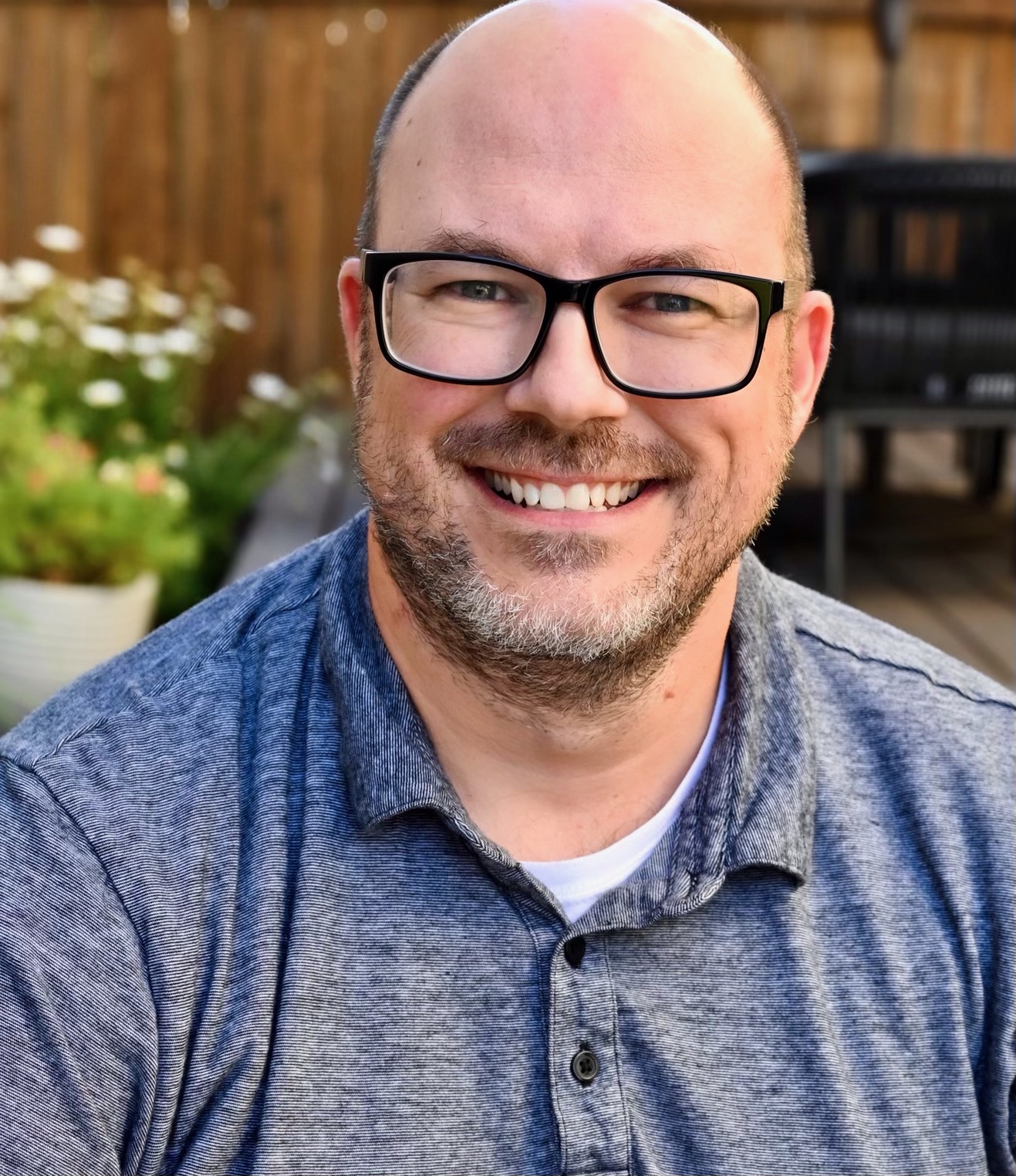
Author/media contact information:
Website: https://travistougaw.com
Email: tb2gaw@hotmail.com.
Link to Amazon:
Amazon: https://www.amazon.com/Foxholes-Marcotte-Collins-Investigative-Thrillers-ebook/dp/B0CG6SZRTX/
Link to B&N:

 jrlewis85's Blog